 +91 9961 173 300
 info@vmchospital.com

 +91 9961 173 300
 info@vmchospital.com

Blogs

Breast Self-Exam: How To Check for Breast Lumps and Changes
Oct 08 | 2026 Admin
Breast cancer is the most common cancer among women in India, according to Globocan 2022 data from the International Agency for Research on Cancer, which is why knowing your own breasts matters. Yet few of us were ever shown how to do a breast self exam properly.
This guide covers how to do a breast self exam in six clear steps, plus when, where, and what to do if something feels different. One point up front: a self-exam helps you know your own normal. It does not replace a clinical breast exam or a mammogram.
Quick Answer
A breast self-exam is a regular at-home check in which you look at and feel your breasts to learn how they normally look and feel, so you can report any change promptly. Do it monthly, a few days after your period ends, using finger pads in small circles. It does not replace clinical exams or mammograms.
Table of Contents
- What Is a Breast Self-Exam?
- Why Should You Do a Breast Self-Exam?
- When Is the Best Time to Do a Breast Self-Exam?
- Who Should Do a Breast Self-Exam?
- Where Should You Do a Breast Self-Exam at Home?
- How to Do a Breast Self Exam: The Six Steps
- What Should You Do If You Notice a Change?
- What Are the Pros and Cons of Breast Self-Exams?
- Key Takeaways
- FAQs
- Conclusion
Key Takeaways
- A breast self-exam is a monthly habit of looking at and feeling your breasts to learn your own normal.
- The six steps: look with arms down, arms raised, and hands on hips; check the nipples; feel lying down; feel again standing or in the shower.
- Do it a few days after your period ends; after menopause, pick the same date each month, using finger pads in small circles with three levels of pressure.
- A self-exam does not replace a clinical breast exam or mammogram.
- Any new or persistent change should be checked by a doctor, not watched at home.
What Is a Breast Self-Exam?
A breast self-exam is a simple routine in which you look at and feel your own breasts and underarm area to become familiar with what is normal for you. It takes about ten minutes, needs no equipment, and is one way of learning how to check your breasts between professional screenings.
Expert Insight: "I tell every woman the same thing: a self-exam is about knowing your own normal. You are not looking for cancer, you are looking for change, and any change is worth a conversation with a doctor." - Dr. Vijayalakshmi G Pillai, Chief Gynecologist, Obstetrician, Infertologist & Laparoscopic Surgeon, 20+ years of experience.
Why Should You Do a Breast Self-Exam?
Breasts change across the month, so the real value lies in familiarity:
- You learn your baseline. Knowing how your breasts usually feel makes a new lump, thickening, or skin change easier to notice.
- You can act sooner. Knowing what is normal for you makes it easier to recognise a change and mention it to a doctor promptly.
- It supports, but never replaces, screening. If you are wondering how to check for breast cancer at home, the honest answer is that touch alone cannot detect or rule out cancer. Clinical exams and mammograms find what a hand cannot.
Health bodies such as the American Cancer Society describe self-exams as optional and stress breast awareness, so treat this habit as a complement to screening, not a substitute.
When Is the Best Time to Do a Breast Self-Exam?
Timing matters because hormones change breast tissue through the month:
- If you still have periods: Choose a day a few days after your period ends, when breasts are least tender.
- If you are postmenopausal: Pick the same date every month, such as the first, so it becomes a habit.
- If you are pregnant or breastfeeding: You can still check, but expect more lumpiness, so learn your normal and report anything that does not settle.
Monthly is the frequency most commonly suggested, though it varies between health bodies, so ask your doctor.
Expert Insight: "Consistency matters more than perfect timing. Pick a day you will remember, the same day every month, and the habit will do most of the work." - Dr. Vijayalakshmi G Pillai.
Who Should Do a Breast Self-Exam?
Any adult woman can build this habit, and it is especially useful for:
- Women in their 30s and older, as they approach the age when mammograms usually begin.
- Women with a family history of breast or ovarian cancer, who may be advised to start screening earlier.
- Women who have had breast biopsies or earlier breast problems, since they already know there is something to watch.
- Women with naturally lumpy or dense breasts, because knowing your baseline helps you tell normal lumpiness from something new.
Men have breast tissue too, so any new lump in a man should also be checked by a doctor.
At Kochi's No.1 women's hospital, we encourage every woman to pair this habit with age-appropriate clinical screening.
Where Should You Do a Breast Self-Exam at Home?
You can do it in three everyday places:
- In front of a mirror, for the visual checks, in good light.
- Lying down on your bed, which spreads the tissue flat and makes lumps easier to feel.
- In the shower, where soapy skin lets your fingers glide, so lumps are easier to check for.
How to Do a Breast Self Exam: The Six Steps
Here are the six steps of breast self examination, in the order most doctors teach them.
Step 1: Look with your arms down. Stand shirtless in front of a mirror, shoulders straight, arms at your sides. Look at both breasts for changes in size, shape, or colour, skin dimpling or puckering, an inward-turned nipple, or redness or swelling.
Step 2: Look with your arms raised. Raise both arms overhead and repeat the visual check. This changes how the tissue sits and can reveal dimpling hidden at rest.
Step 3: Press your hands on your hips. Press your hands firmly on your hips to tighten the chest muscles. Look again for changes in contour or skin pulling, turning slightly to check each side.
Step 4: Check the nipples. Look at each nipple for changes in shape, scaling, or crusting. Gently squeeze each nipple and note any discharge, especially if it is bloody or appears without squeezing.
Step 5: Feel your breasts lying down. Lie flat with a pillow under your right shoulder and your right arm behind your head. With your left hand, use the pads of your three middle fingers, not the tips, to make small coin-sized circles. Press lightly, then with medium pressure, then firmly. Cover the whole breast in a vertical up-and-down pattern, from collarbone to bra line and from armpit to breastbone. Repeat on the other side.
Step 6: Feel your breasts standing or in the shower. Repeat the same circles while standing with one arm raised, using soapy skin in the shower if you like. Include the armpit, where breast tissue extends, and the area under the collarbone.
Expert Insight: "Technique matters more than force. Use the flat pads of your fingers and cover every area in the same pattern each month." - Dr. Vijayalakshmi G Pillai.
What Should You Do If You Notice a Change?
Do not panic, since most breast changes are benign, such as cysts or hormonal lumpiness. But do not wait and watch for months either:
- If it persists beyond one full menstrual cycle, or you are postmenopausal, book a clinical breast exam.
- Do not rely on a normal-feeling self-exam to skip a scheduled mammogram.
A clinician can confirm what you have found with an exam and imaging, so a visit to the best breast cancer screening in Kochi team should be your next step.
Expert Insight: "Please do not wait for pain. Many breast changes that need attention are painless, and I would always rather see a woman early and reassure her." - Dr. Vijayalakshmi G Pillai.
Noticed something, or not sure what you are feeling? Book a breast screening consultation with our Breast Onco Surgery specialists today. It takes only a few minutes to book.
What Are the Pros and Cons of Breast Self-Exams?
Pros:
- Free, private, and takes about ten minutes a month.
- Build familiarity with your own breasts, so changes stand out.
Cons:
- Cannot detect small tumours that a mammogram can find.
- Can cause false alarms, since normal breasts are naturally lumpy.
- May create false reassurance and lead some women to skip clinical screening.
For women who prefer one place for all their check-ups, the best gynecology hospital in Kochi can combine breast screening with your routine women's health check-ups.
FAQs
How do you do a breast self-exam at home?
Look in a mirror with your arms down, raised, and on your hips, check your nipples, then feel each breast lying down and again standing or in the shower. Use the pads of three fingers in small circles with light, medium, and firm pressure.
When is the best time to do a breast self-exam?
A few days after your period ends is best, when breasts are least tender. If you no longer have periods, choose the same date each month.
How often should you do a breast self-exam?
Monthly is the most commonly suggested frequency, though it varies between health bodies, so ask your doctor.
Can a breast self-exam detect breast cancer?
A self-exam can help you notice changes, but it cannot confirm or rule out cancer. Only clinical exams and imaging such as mammography can do that.
What should you look for during a breast self-exam?
Look and feel for anything new or different for you, such as a lump, thickening, skin dimpling, nipple changes, or swelling. If you find a change that persists, see a doctor.
Is a breast self-exam enough without a mammogram?
No. A self-exam helps you know your normal, but it does not replace clinical breast exams or mammograms at the ages and intervals your doctor recommends.
Conclusion
Learning how to do a breast self exam takes about ten minutes a month and gives you a clear sense of your own normal. Treat it as one part of your breast health, alongside clinical exams and mammograms, and act quickly on anything new.
Book a breast screening consultation with our Breast Onco Surgery specialists today to pair your monthly self-exam with a screening plan built around your age and risk.
When to Get a Mammogram? A Complete Guide
Sep 30 | 2026 Admin
If you're a woman in your 30s or 40s wondering exactly when to get a mammogram, you're asking one of the most searched - and most inconsistently answered - questions in women's health. Mammogram guidelines vary by age, family history, and individual ...

Best Age to Freeze Eggs: A Complete Guide
Sep 29 | 2026 Admin
If you're a woman in your early 30s wondering whether now is the right time, you're asking the single most common question our Social Freezing team hears: what's the best age to freeze eggs? It's a fair question -egg freezing works best when timed co...

What Is Secondary Infertility?
Sep 28 | 2026 Admin
You've already had one child - so why is it suddenly so hard to conceive again? Secondary infertility catches many couples off guard, and it's more common than most people realize: some clinical estimates suggest it accounts for roughly half of all i...

Diabetes During Pregnancy: Risks, Signs & Care Guide
Sep 25 | 2026 Admin
Nearly 1 in 6 pregnancies worldwide is affected by some form of high blood sugar, according to the International Diabetes Federation (2021) -and India has one of the highest rates globally. If you're pregnant and wondering whether diabetes during pre...

Normal Delivery vs C-Section: Which Is Better?
Sep 24 | 2026 Admin
Nearly every expecting mother in India eventually asks some version of the same question: normal delivery vs C-section - which is better? It's a fair question - both delivery methods carry different risks and benefits, and the "right" answe...

What Is Gestational Diabetes?
Sep 18 | 2026 Admin
If your doctor recently mentioned a glucose tolerance test, or a friend casually said "I had gestational diabetes" during her pregnancy, you're probably wondering exactly what that means for you. It's a fair question - gestational diabetes ...

Male Infertility: Causes, Signs & Treatment Guide
Sep 17 | 2026 Admin
Male factors are involved in roughly 40–50% of all infertility cases worldwide, according to the World Health Organization (2023) - yet when a couple struggles to conceive, the conversation still tends to focus almost entirely on the woman. If ...
What Are the Early Signs of Breast Cancer? A Kochi Doctor Explains
Sep 16 | 2026 Admin
Nearly 1 in 28 Indian women will develop breast cancer in her lifetime, and early detection can push five-year survival rates above 90%.* Yet many women delay a check-up simply because they don't know what the early signs of breast cancer actually lo...
IUI vs IVF: What's the Real Difference?
Sep 15 | 2026 Admin
Nearly 1 in 6 couples worldwide experience infertility at some point in their reproductive lives, according to the World Health Organization (2023)-and for many of them, the first big decision isn't whether to seek treatment, but which treatment to s...
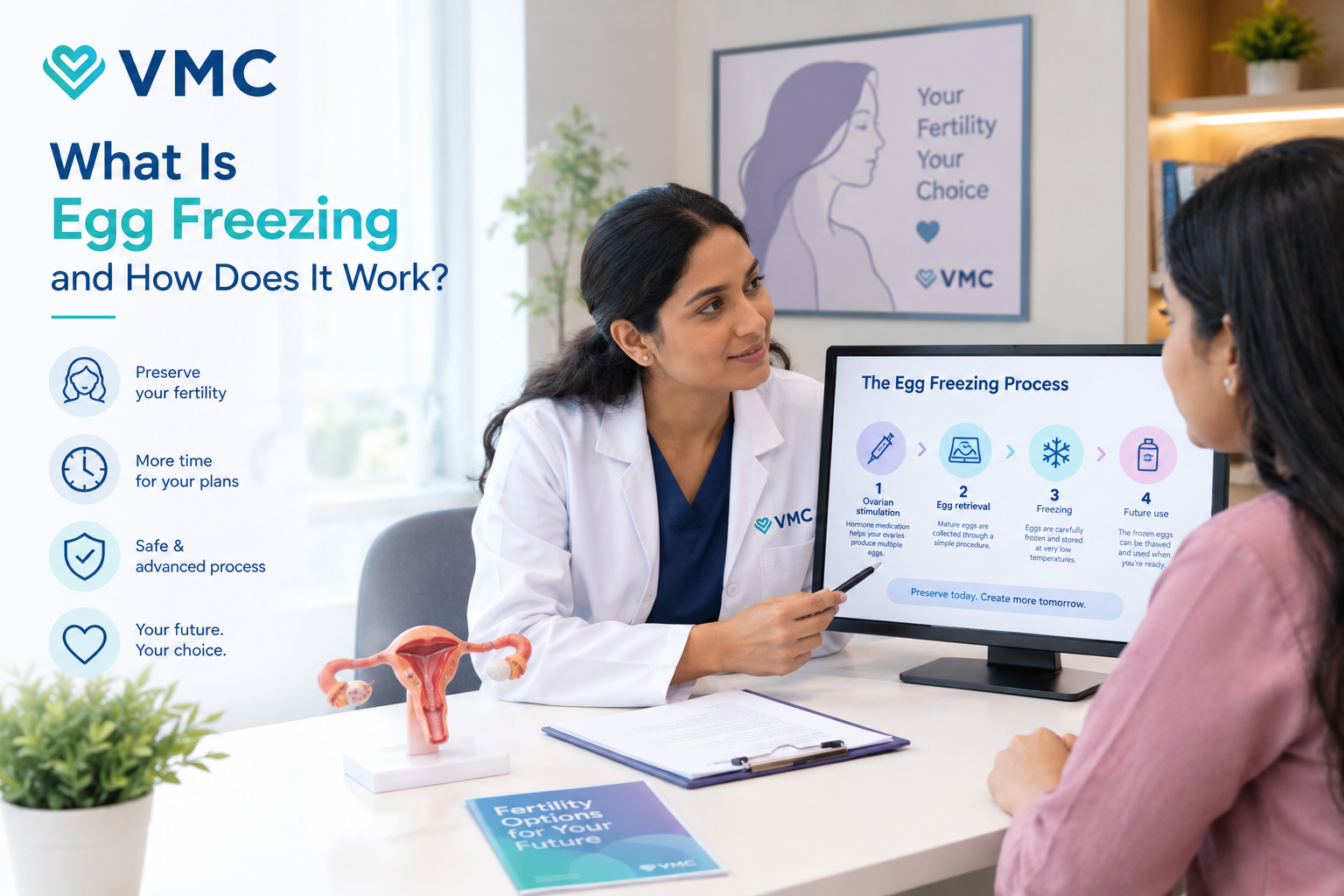
What Is Egg Freezing and How Does It Work?
Sep 14 | 2026 Admin
Maybe you're focused on your career, haven't found the right partner yet, or simply aren't ready for children right now - but you'd still like the option to have a biological child later. Egg freezing exists exactly for this reason, and it's one of t...
What Women's Health Warning Signs Should You Never Ignore?
Aug 31 | 2026 Admin
Certain symptoms — like unusual bleeding, persistent pelvic pain, unexplained weight changes, or new lumps — should never be brushed off as "probably nothing." While many symptoms turn out to be minor, some are ...
What Are the First Signs of Menopause?
Aug 31 | 2026 Admin
The first signs of menopause typically include irregular periods, hot flashes, night sweats, mood changes, and sleep disturbances, usually starting in a woman's mid-to-late 40s during a phase called perimenopause. These changes can last several years...
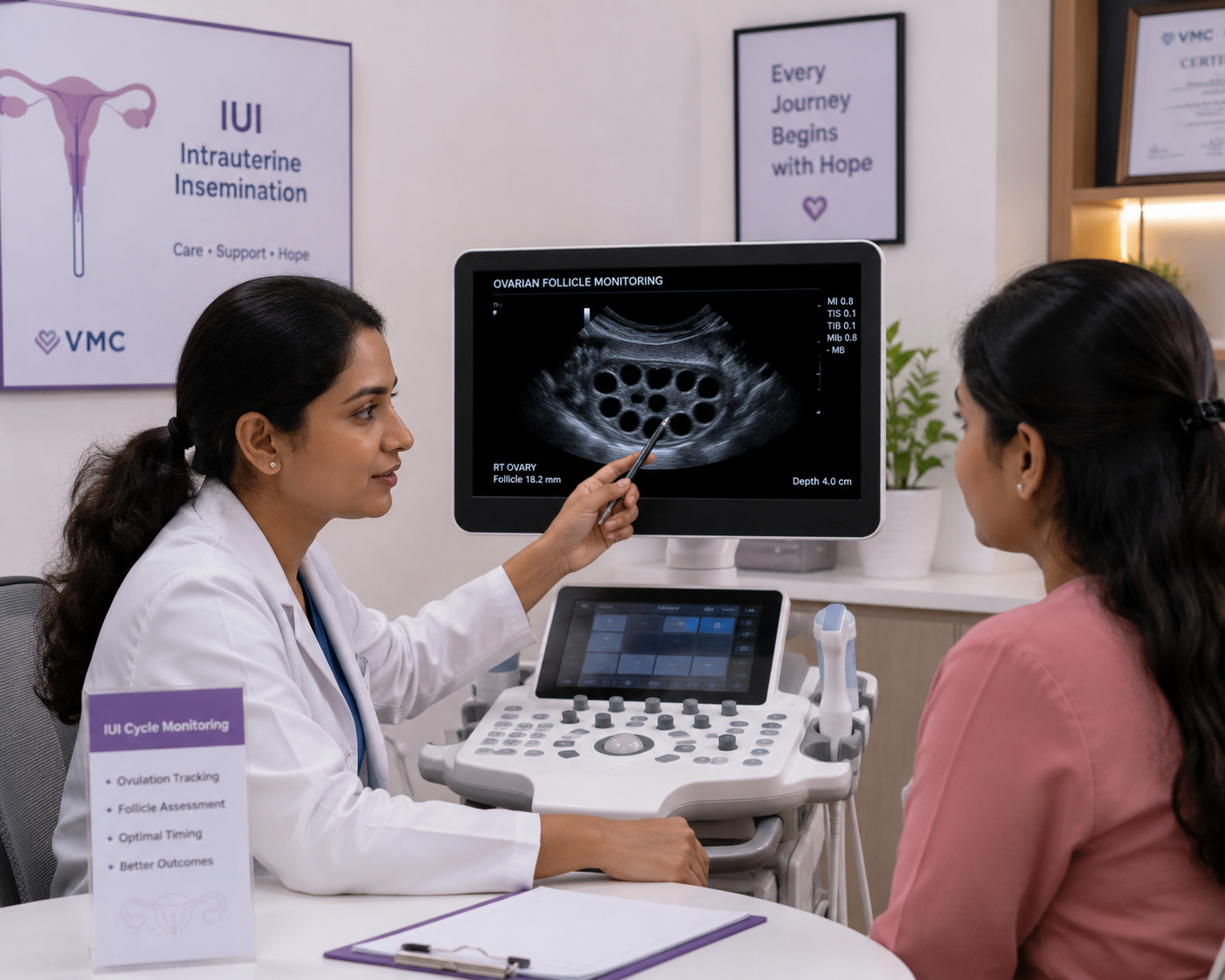
What Is IUI? A Simpler First Step Before IVF
Aug 31 | 2026 Admin
IUI, or Intrauterine Insemination, is a fertility treatment where specially prepared sperm is placed directly into the uterus around the time of ovulation, giving sperm a shorter distance to travel and a better chance of reaching the egg. It's simple...

What Should Parents Know Before Taking a Premature Baby Home?
Aug 29 | 2026 Admin
What Should Parents Know Before Taking a Premature Baby Home? Before taking a premature baby home, parents should confirm the baby maintains a stable body temperature, feeds well, has steady weight gain, and shows no breathing concerns — th...

Is Anesthesia Safe? What Patients Should Know Before Surgery
Aug 28 | 2026 Admin
Is Anaesthesia Safe? What Patients Should Know Before Surgery Yes, modern anaesthesia is very safe for the vast majority of patients, thanks to advanced monitoring technology and standardized safety protocols developed over decades of clinical pr...

What Happens When a Baby Is Born with Low Birth Weight?
Aug 13 | 2026 Admin
A baby is considered to have low birth weight if they weigh less than 2.5 kg (5.5 lbs) at birth, regardless of how many weeks of pregnancy they completed. This can happen because the baby was born prematurely, didn't grow adequately in the womb, or b...
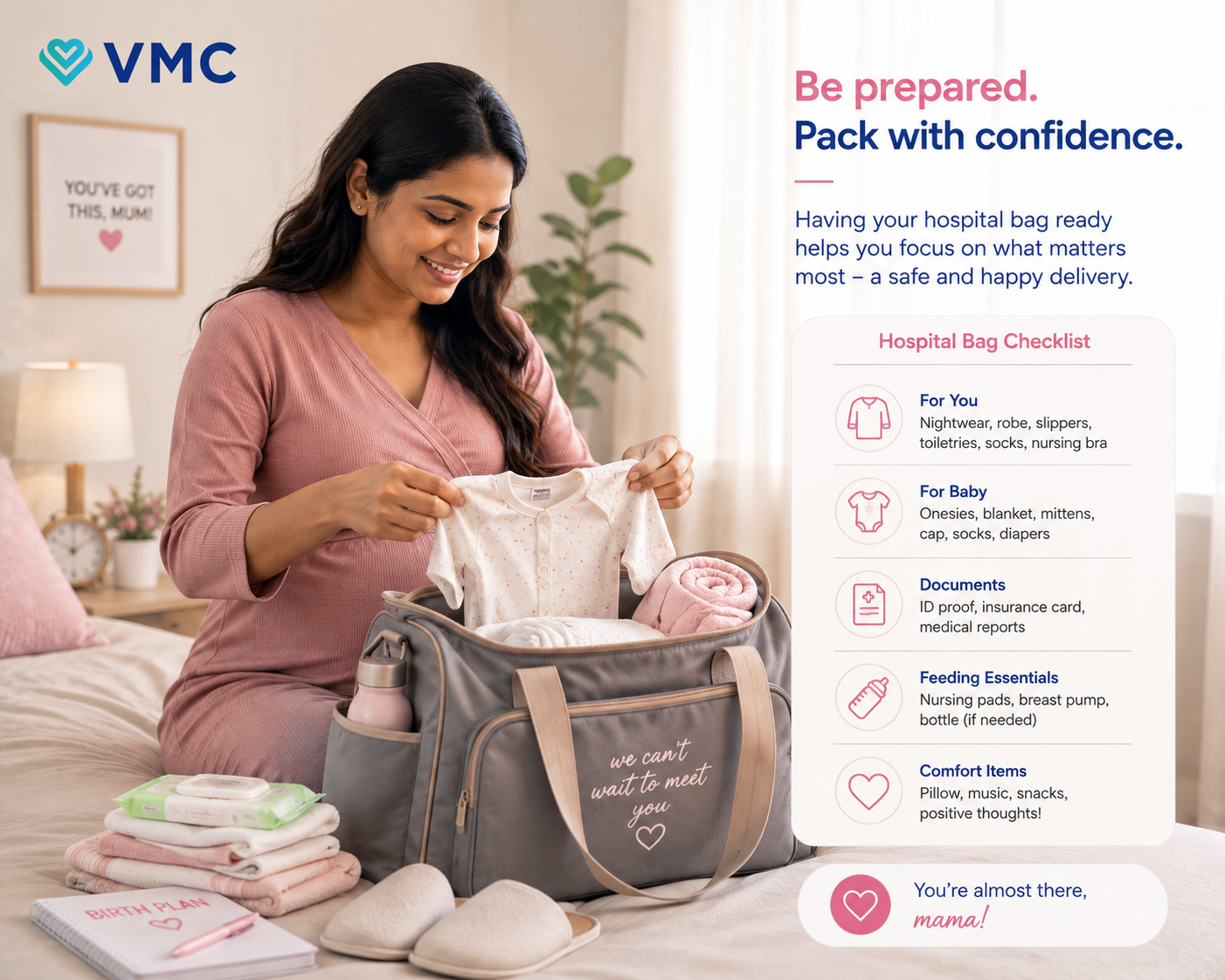
How to Prepare for Delivery: A Complete Checklist
Aug 12 | 2026 Admin
How Should You Prepare for Your Delivery? Preparing for delivery involves packing your hospital bag, finalizing your birth plan, understanding labor signs, and choosing the right maternity hospital well before your due date. Starting preparations...
What Are the Common Causes of Irregular Periods?
Aug 11 | 2026 Admin
Irregular periods — cycles shorter than 21 days, longer than 35 days, or unpredictable in flow — are usually caused by hormonal imbalances, PCOS, thyroid disorders, stress, or lifestyle changes. Occasional irregularity is common and often...

Why Am I Not Getting Pregnant? When Should You Seek Help?
Aug 10 | 2026 Admin
Why Am I Not Getting Pregnant? When Should You Seek Help? If you've been trying to conceive for months without success, you're not alone — and it doesn't automatically mean something is wrong. Most healthy couples under 35 should seek a fer...

A Beginner’s Guide to Endometriosis Surgery
Mar 05 | 2022 Admin
Endometriosis can be described as a health condition, where the type of tissue, which lines the uterus of a woman grows outside of it. However, the only way to determine if someone is suffering from this condition is to perform a surgery, which is ca...
What Is IVF and When It Should Be Considered
Jan 20 | 2022 Admin
Several experts in the field of health care have admitted that IVF treatment is far more successful when compared to other fertility treatments like intrauterine insemination. What makes IVF treatment different and better than intrauterine inseminati...

Vijayalakshmi Medical Centre (VMC Hospital),
33/ 1734 D,
Chakkaraparambu,
Near Hotel Holiday Inn,
NH Bypass, Vennala P O,
Kochi - 682028
+91 9946 932 600 | +91 9961 173 300
info@vmchospital.com


Terms of use |
Privacy Policy |
Contact us
© 2026 Vijayalakshmi Medical Centre. All Rights Reserved
Designed & Developed by Websoul Techserve