 +91 9961 173 300
 info@vmchospital.com

 +91 9961 173 300
 info@vmchospital.com

Blogs
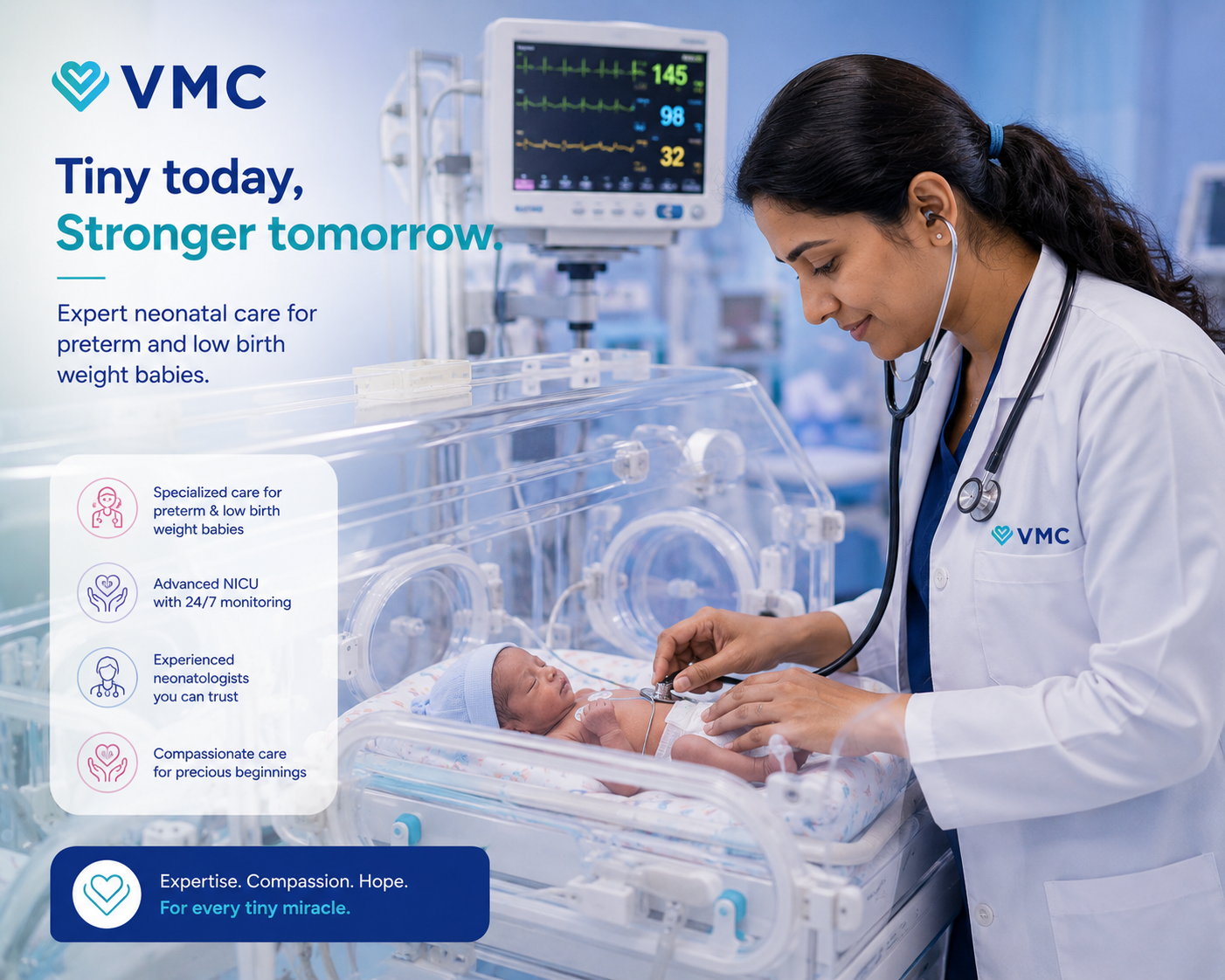
What Happens When a Baby Is Born with Low Birth Weight?
Aug 13 | 2026 Admin
A baby is considered to have low birth weight if they weigh less than 2.5 kg (5.5 lbs) at birth, regardless of how many weeks of pregnancy they completed. This can happen because the baby was born prematurely, didn't grow adequately in the womb, or both. It sounds frightening, but here's the reassuring part: with prompt monitoring and specialized neonatal care, the vast majority of low-birth-weight babies catch up and thrive. This guide from the paediatrics and neonatology team at Kochi's No.1 Women's Hospital walks you through exactly what to expect.
Who Is Affected — and Who Is at Higher Risk?
Low birth weight isn't rare. Globally, roughly 1 in 7 babies is born under 2.5 kg, and the numbers are similar across India. It can happen to any pregnancy, but certain factors raise the likelihood:
-
Premature delivery (before 37 weeks) — the single biggest contributor, since most weight gain happens in the third trimester
- Multiple pregnancies — twins, triplets, or more, who typically share womb space and nutrients
- Maternal high blood pressure or preeclampsia — which can restrict blood flow to the placenta
- Poor maternal nutrition during pregnancy
- Smoking, alcohol, or substance use during pregnancy
- Placental issues — such as placental insufficiency, which limits nutrient and oxygen supply
-
Maternal age — very young or older mothers carry slightly elevated risk
-
Chronic maternal health conditions — including diabetes and kidney disease, when poorly controlled
If you're already flagged as a high-risk pregnancy, your obstetric team will typically monitor fetal growth more closely through the third trimester using ultrasound scans. Growth is usually tracked using an estimated fetal weight percentile — a baby measuring below the 10th percentile for gestational age is considered to have intrauterine growth restriction (IUGR), which is one of the more common reasons for low birth weight even at full term.
What Are the Immediate Concerns After Birth?
Low birth weight babies are more vulnerable in the first days and weeks because several body systems are still maturing. Common areas doctors watch closely include:
- Temperature regulation — low-birth-weight babies have less body fat, making it harder for them to stay warm on their own
- Feeding — a weaker suck-and-swallow reflex can make breastfeeding or bottle-feeding slower and more effortful
- Blood sugar — hypoglycemia is common in the first 24–48 hours and needs regular monitoring
- Breathing — underdeveloped lungs, especially in premature babies, can lead to respiratory distress
- Immunity — a weaker immune response increases susceptibility to infection
- Jaundice — low-birth-weight babies are more prone to elevated bilirubin levels
Not every baby experiences all of these — severity generally correlates with how early or how small the baby is. A baby born at 2.3 kg near full term faces a very different picture than one born at 1.2 kg several weeks early.
When Does a Baby Need NICU Care?
Not every low-birth-weight baby needs intensive care, but admission to the NICU (Neonatal Intensive Care Unit) is common when a baby:
- Weighs under 2 kg
- Shows signs of breathing difficulty
- Cannot maintain body temperature independently, even when swaddled
- Has low or unstable blood sugar
- Was born significantly premature (before 34 weeks)
- Shows early signs of infection
In the NICU, babies are cared for in temperature-controlled incubators with continuous monitoring of heart rate, oxygen levels, and breathing, alongside feeding support until they're stable enough to go home.
Where to Get the Right Level of Care
This is where the choice of hospital matters enormously. Not every facility has an equipped NICU or round-the-clock neonatology coverage — and if complications arise after delivery, being transferred to another hospital costs precious time.
Look for a hospital that offers:
- An on-site, fully staffed NICU
- 24/7 availability of a qualified neonatologist
- Integrated obstetric and paediatric teams working together
- Transparent communication with parents at every stage
Kochi's No.1 Women's Hospital brings together the best gynaecology hospital in Kochi, a dedicated paediatrics and neonatology department, and some of the best neonatologists in Kochi under one roof — recognized among the best child care hospitals in Kochi for exactly this kind of integrated, no-transfer care.
Why Early Monitoring Makes Such a Difference
Babies who receive prompt, specialized attention after a low-weight birth generally show strong catch-up growth in the following months — a phenomenon doctors call "catch-up growth." Early monitoring allows the care team to catch and manage complications — feeding difficulties, jaundice, infections — before they escalate into something more serious.
This is also why prenatal care matters so much. Regular scans during a high-risk pregnancy can flag slow fetal growth early, giving your obstetric team time to plan the safest possible delivery and, if needed, arrange NICU readiness in advance.
Can Anything Be Done During Pregnancy to Reduce the Risk?
While not every case of low birth weight is preventable, expectant mothers can take several steps to support healthy fetal growth:
- Attend all scheduled prenatal appointments, so growth can be tracked consistently through each trimester
- Eat a balanced, nutrient-rich diet, with adequate protein, iron, folic acid, and calcium
- Avoid smoking, alcohol, and recreational drug use entirely during pregnancy
- Manage existing health conditions, such as high blood pressure, diabetes, or thyroid disorders, under medical supervision
- Space pregnancies appropriately, since very short gaps between pregnancies are linked to higher risk
- Seek prompt care for warning signs, such as reduced fetal movement or unusual swelling
Your obstetrician can also recommend additional growth scans if any risk factors are identified early, giving the care team more lead time to plan ahead.
How Low Birth Weight Babies Are Cared For
Care typically unfolds in stages, from the NICU through the first months at home:
In the Hospital
- Temperature regulation — incubators, or kangaroo care (continuous skin-to-skin contact with a parent), which has strong evidence for stabilizing heart rate and breathing
- Feeding support — breast milk is strongly preferred where possible, sometimes given via a feeding tube initially, and supplemented as needed
- Regular weight checks — daily tracking to confirm steady growth
- Monitoring for jaundice and infection — with treatment (like phototherapy) started promptly if needed
- Gradual transition — from incubator to open crib as the baby stabilizes
After Discharge
- Scheduled follow-up visits with a paediatrician to track weight, length, and head circumference
- An adjusted vaccination schedule, based on corrected age for premature babies
- Close attention to feeding cues and growth trends at home
- Developmental screening over the following months and years
1. Will my low birth weight baby catch up in growth?
Most babies show significant catch-up growth within the first one to two years, especially with consistent nutrition, feeding support, and paediatric follow-up.
2. Is kangaroo care really effective for low birth weight babies?
Yes. Skin-to-skin contact helps regulate the baby's temperature and heart rate, supports breastfeeding, and has been shown to reduce NICU stay length in many cases.
3. How long will my baby need to stay in the NICU?
It varies widely — from a few days for a mildly low-weight, near-term baby to several weeks for a very premature infant. Your neonatology team will explain expected milestones for discharge.
4. Can low birth weight be prevented?
Not always, but good prenatal nutrition, regular check-ups, and managing conditions like high blood pressure or diabetes during pregnancy significantly reduce the risk. High-risk pregnancy care with close monitoring also helps catch slow growth early.
5. Will my baby need long-term follow-up care after going home?
Yes. Regular paediatric check-ups are recommended for at least the first couple of years to track growth and developmental milestones, even after the baby appears to be doing well.
Conclusion
A low birth weight diagnosis can feel overwhelming in the moment, but it's rarely the whole story. With experienced neonatal care, close monitoring, and the right support system, most low-birth-weight babies go on to grow, develop, and thrive just like any other child. Choosing a hospital equipped with an advanced NICU and a dedicated paediatrics and neonatology team — like Kochi's No.1 Women's Hospital — means your baby gets expert care from the very first moment, without the added stress of a transfer.
If you're expecting and have concerns about fetal growth, or if your baby has already been diagnosed with low birth weight, reach out to our team to schedule a consultation with the best neonatologist in Kochi.

How to Prepare for Delivery: A Complete Checklist
Aug 12 | 2026 Admin
How Should You Prepare for Your Delivery? Preparing for delivery involves packing your hospital bag, finalizing your birth plan, understanding labor signs, and choosing the right maternity hospital well before your due date. Starting preparations...
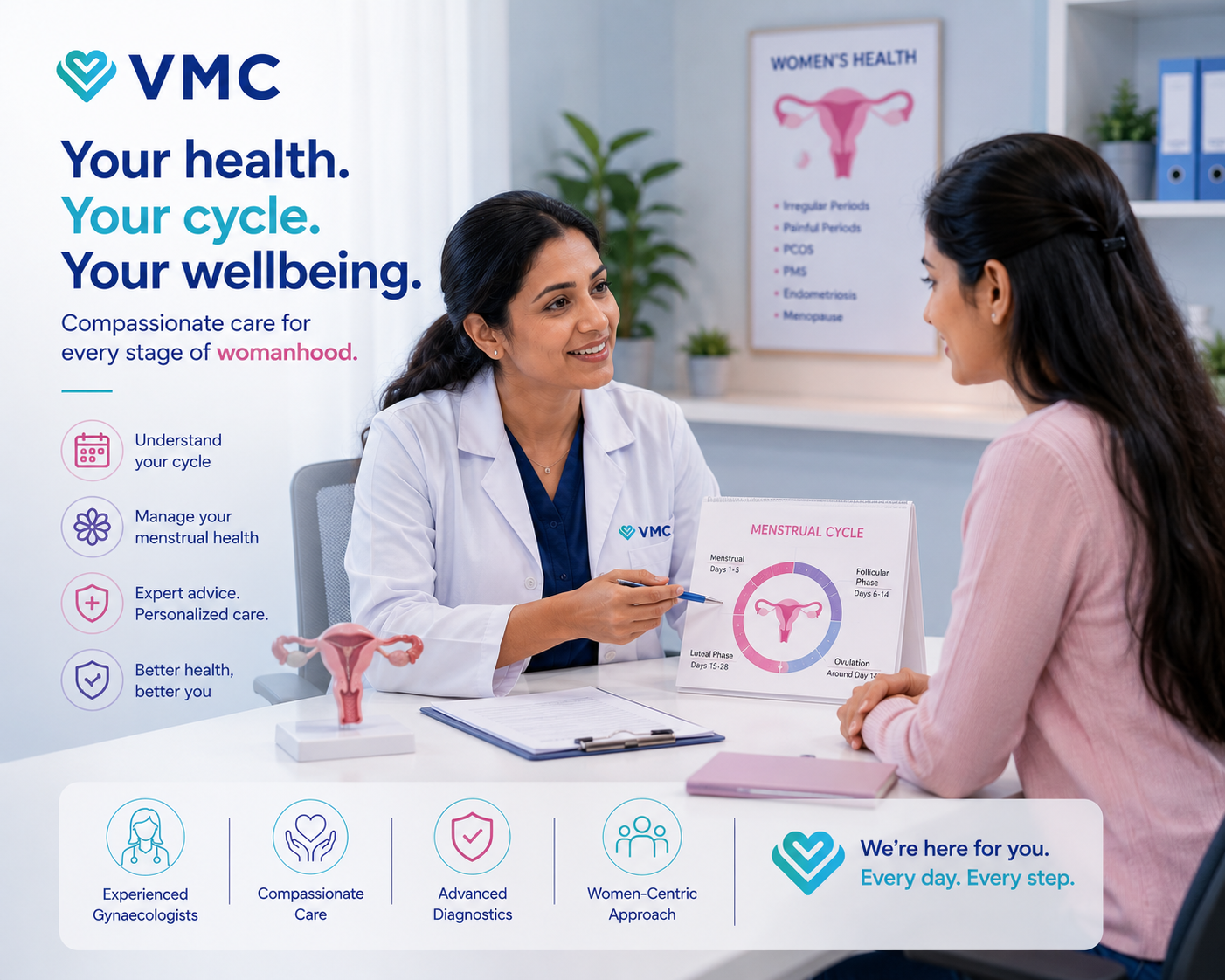
What Are the Common Causes of Irregular Periods?
Aug 11 | 2026 Admin
Irregular periods — cycles shorter than 21 days, longer than 35 days, or unpredictable in flow — are usually caused by hormonal imbalances, PCOS, thyroid disorders, stress, or lifestyle changes. Occasional irregularity is common and often...

Why Am I Not Getting Pregnant? When Should You Seek Help?
Aug 10 | 2026 Admin
Why Am I Not Getting Pregnant? When Should You Seek Help? If you've been trying to conceive for months without success, you're not alone — and it doesn't automatically mean something is wrong. Most healthy couples under 35 should seek a fer...

A Beginner’s Guide to Endometriosis Surgery
Mar 05 | 2022 Admin
Endometriosis can be described as a health condition, where the type of tissue, which lines the uterus of a woman grows outside of it. However, the only way to determine if someone is suffering from this condition is to perform a surgery, which is ca...

What Is IVF and When It Should Be Considered
Jan 20 | 2022 Admin
Several experts in the field of health care have admitted that IVF treatment is far more successful when compared to other fertility treatments like intrauterine insemination. What makes IVF treatment different and better than intrauterine inseminati...

Vijayalakshmi Medical Centre (VMC Hospital),
33/ 1734 D,
Chakkaraparambu,
Near Hotel Holiday Inn,
NH Bypass, Vennala P O,
Kochi - 682028
+91 9946 932 600 | +91 9961 173 300
info@vmchospital.com


Terms of use |
Privacy Policy |
Contact us
© 2026 Vijayalakshmi Medical Centre. All Rights Reserved
Designed & Developed by Websoul Techserve