 +91 9961 173 300
 info@vmchospital.com

 +91 9961 173 300
 info@vmchospital.com

Blogs
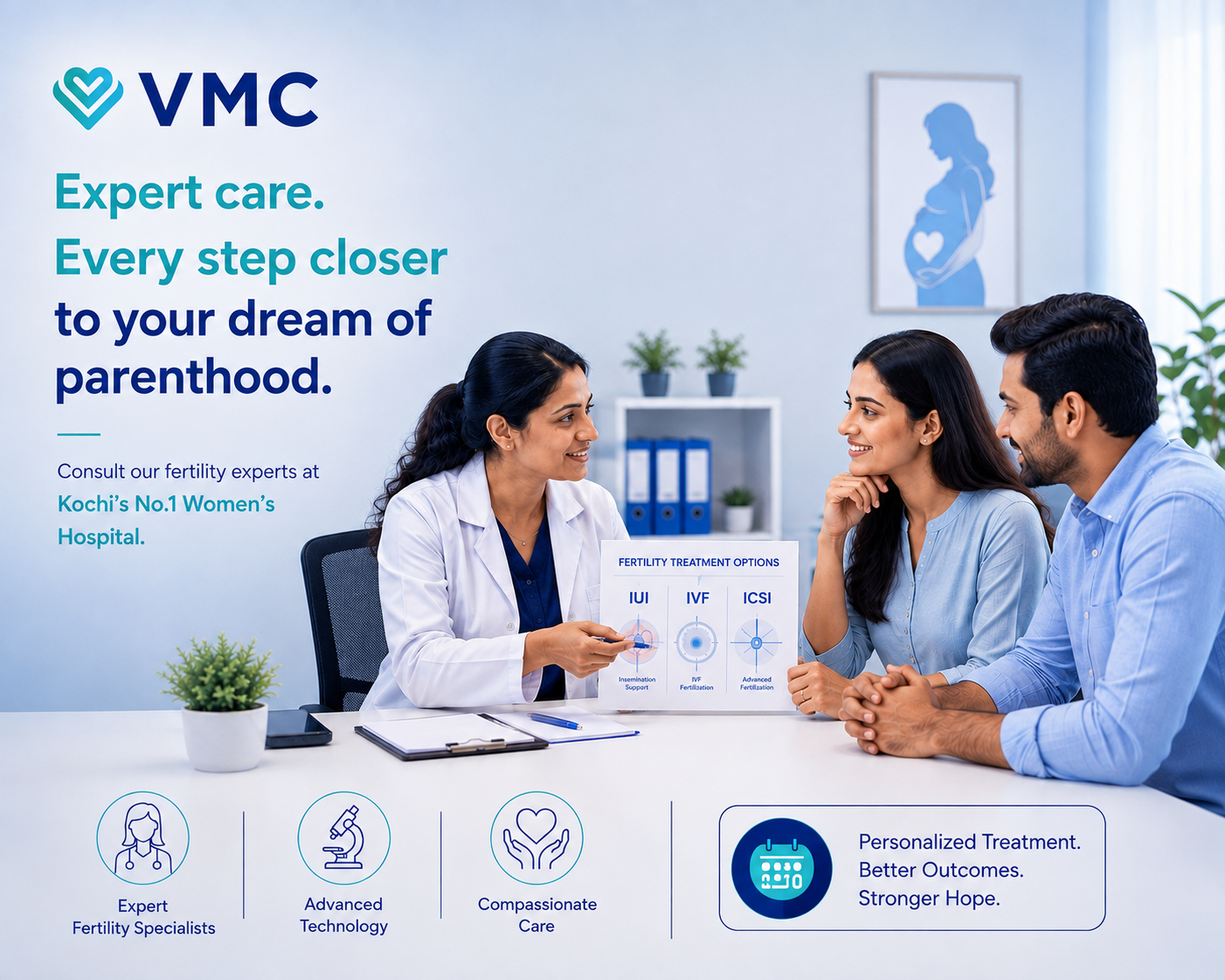
Why Am I Not Getting Pregnant? When Should You Seek Help?
Aug 10 | 2026 Admin
Why Am I Not Getting Pregnant? When Should You Seek Help?
If you've been trying to conceive for months without success, you're not alone — and it doesn't automatically mean something is wrong. Most healthy couples under 35 should seek a fertility evaluation after 12 months of trying, or after 6 months if the woman is over 35. Delayed conception can result from ovulation issues, hormonal imbalances, sperm health, or underlying conditions like PCOS or endometriosis. The good news: with the right guidance from the best IVF centre in Kochi, most causes are diagnosed and treatable.
Let's break down the who, what, when, where, why, and how of fertility struggles — so you know exactly what to do next.
Who Should Be Concerned About Delayed Pregnancy?
Fertility challenges don't discriminate — they can affect anyone, but certain groups face higher risk:
-
Women over 35 trying to conceive
-
Women with irregular or absent periods
-
Couples with a history of miscarriage
-
Men with low sperm count or motility issues
-
Individuals with diagnosed PCOS, thyroid disorders, or endometriosis
-
Couples who've been trying for 12+ months (or 6+ months if over 35)
If you fall into any of these categories, it's worth consulting a specialist at the best gynaecology hospital in Kochi sooner rather than later.
What Causes Difficulty in Getting Pregnant?
Infertility isn't one condition — it's a symptom of several possible underlying issues. Common causes include:
Female Factors
-
Ovulation disorders — irregular or absent ovulation, often linked to PCOS
-
Blocked fallopian tubes — frequently caused by past infections or endometriosis
-
Uterine or cervical issues — fibroids, polyps, or structural abnormalities
-
Age-related decline in egg quality — natural fertility drops after 35
-
Hormonal imbalances — thyroid dysfunction, high prolactin levels
Male Factors
-
Low sperm count or poor motility
-
Abnormal sperm shape (morphology)
-
Hormonal or genetic conditions
-
Lifestyle factors — smoking, alcohol, obesity, stress
Unexplained Infertility
In roughly 10–15% of cases, no clear cause is found even after thorough testing — this is where advanced diagnostics and IVF expertise make the biggest difference.
When Should You See a Fertility Specialist?
Timing matters in fertility care. Here's a simple guide:
-
Under 35, with regular cycles: Seek help after 12 months of trying
-
Over 35: Seek help after 6 months of trying
-
Over 40: See a specialist immediately — don't wait
-
Irregular or absent periods: See a doctor right away, regardless of age
-
Known condition (PCOS, endometriosis, prior pelvic surgery): Start evaluation as soon as you begin trying to conceive
-
2 or more miscarriages: Seek help after the second loss
Don't wait until frustration sets in. Early evaluation at the best paediatrician in Kochi's affiliated women's care center — often the same multi-specialty hospital — gives you more treatment options and better outcomes.
Where to Get Reliable Fertility Care in Kochi
Not every hospital offers the full spectrum of reproductive care under one roof. When choosing a fertility partner, look for:
-
Board-certified reproductive endocrinologists
-
On-site andrology and embryology labs
-
Transparent success rate reporting
-
Integrated care — from diagnosis to IVF to postnatal support
-
Access to a best neonatologist in Kochi and NICU support, in case of high-risk pregnancies later
This is exactly what sets Kochi's No.1 Women's Hospital apart — a single destination combining the best gynaecology hospital in Kochi, a dedicated IVF centre, and paediatrics & neonatology care, so your journey from conception to childbirth stays with one trusted team.
Why Does This Happen? Understanding the Root Causes
Fertility depends on a delicate balance of hormones, reproductive anatomy, and overall health. Several everyday factors can quietly disrupt this balance:
-
Chronic stress — disrupts ovulation hormones
-
Weight fluctuations — both underweight and overweight can affect fertility
-
Sleep deprivation — impacts hormone regulation
-
Environmental toxins — certain chemicals affect egg and sperm quality
-
Untreated infections (STIs) — can cause tubal blockages
-
Age — the single biggest factor affecting egg quantity and quality
Understanding "why" helps specialists at the best IVF centre in Kochi tailor treatment instead of applying a one-size-fits-all approach.
How Fertility Specialists Diagnose and Treat the Problem
Step 1: Initial Evaluation
A detailed history, physical exam, and basic bloodwork (hormone panel, thyroid function) for both partners.
Step 2: Diagnostic Testing
-
Ultrasound to assess ovarian reserve and uterine health
-
Hysterosalpingography (HSG) to check fallopian tube patency
-
Semen analysis for male partners
Step 3: Personalized Treatment Plan
Depending on findings, your doctor — ideally the best IVF doctor in Kochi — may recommend:
-
Lifestyle and medical management — for mild hormonal issues
-
Ovulation induction — medication to stimulate egg release
-
IUI (Intrauterine Insemination) — for mild male-factor or unexplained infertility
-
IVF (In Vitro Fertilization) — for tubal blockage, severe male-factor infertility, or after failed IUI cycles
-
ICSI — a specialized IVF technique for very low sperm counts
Step 4: Ongoing Support
From the first consultation through pregnancy and delivery, continuity of care matters — which is why choosing the best child care hospital in Kochi with integrated paediatric and neonatology services gives families long-term peace of mind.
1. How long should I try before seeing a doctor? Generally 12 months if you're under 35, or 6 months if you're over 35. See a specialist immediately if you have irregular periods or a known reproductive condition.
2. Is IVF the only option for infertility? No. IVF is one of several treatments. Many patients conceive with lifestyle changes, ovulation induction, or IUI before IVF is ever needed.
3. Does age really affect fertility that much? Yes. Egg quantity and quality decline gradually from the late 20s and more sharply after 35, making timely evaluation important.
4. Can male infertility be treated? Absolutely. Options range from lifestyle changes and medication to advanced techniques like ICSI, depending on the diagnosis.
5. What makes a hospital the best choice for fertility treatment? Look for experienced specialists, an in-house embryology lab, transparent success rates, and integrated women's and child care — exactly what you'll find at Kochi's No.1 Women's Hospital.
Conclusion
Struggling to conceive can feel isolating, but understanding the "why" and "when" takes away much of the fear. Most fertility issues are diagnosable and treatable with the right expertise. If you've crossed the recommended waiting period — or simply want peace of mind — don't delay a consultation.
Book an appointment with the best IVF doctor in =Kochi today and take the next confident step toward parenthood, backed by a team that supports you from fertility care through delivery and beyond.
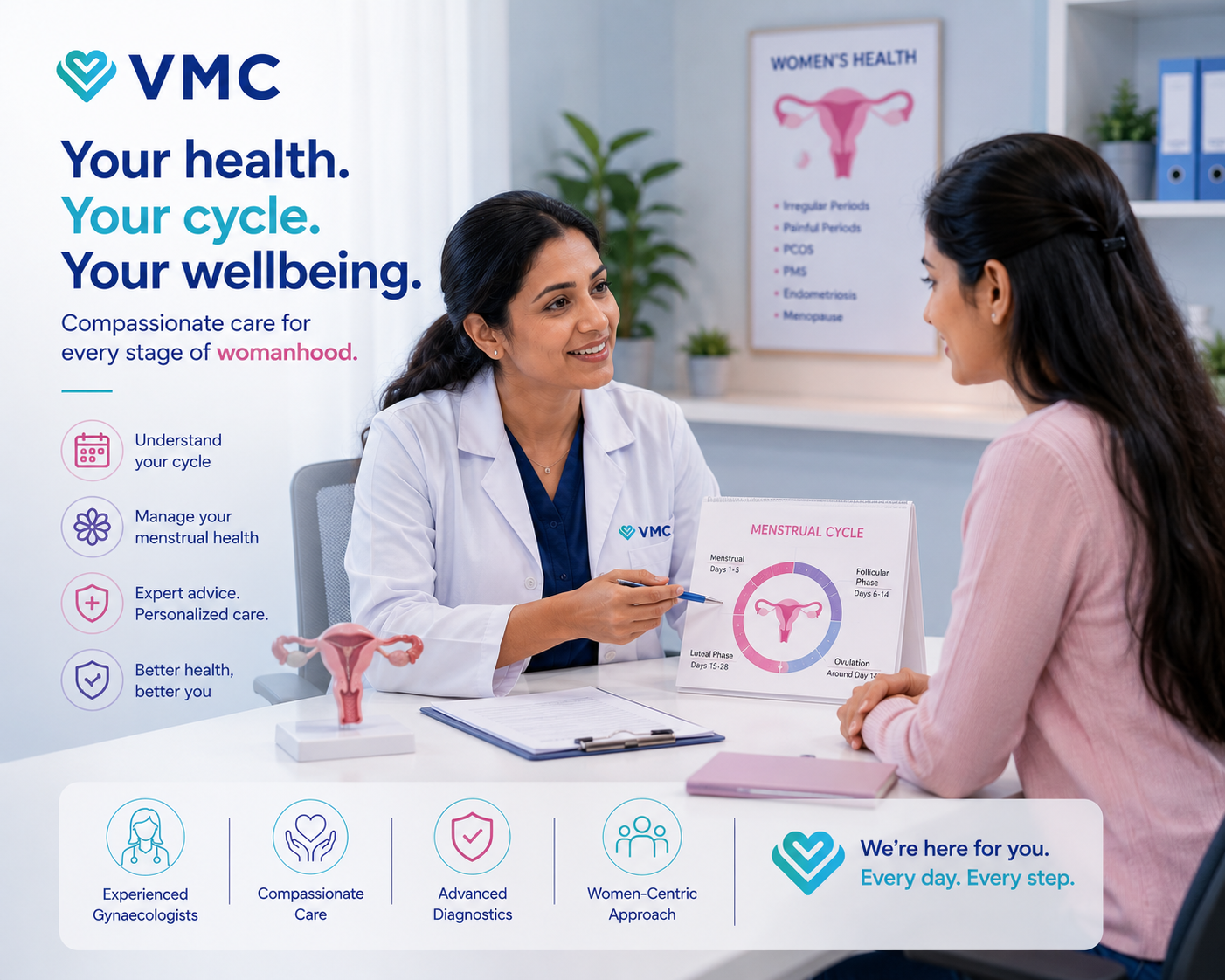
What Are the Common Causes of Irregular Periods?
Aug 11 | 2026 Admin
Irregular periods — cycles shorter than 21 days, longer than 35 days, or unpredictable in flow — are usually caused by hormonal imbalances, PCOS, thyroid disorders, stress, or lifestyle changes. Occasional irregularity is common and often...

A Beginner’s Guide to Endometriosis Surgery
Mar 05 | 2022 Admin
Endometriosis can be described as a health condition, where the type of tissue, which lines the uterus of a woman grows outside of it. However, the only way to determine if someone is suffering from this condition is to perform a surgery, which is ca...
What Is IVF and When It Should Be Considered
Jan 20 | 2022 Admin
Several experts in the field of health care have admitted that IVF treatment is far more successful when compared to other fertility treatments like intrauterine insemination. What makes IVF treatment different and better than intrauterine inseminati...

Vijayalakshmi Medical Centre (VMC Hospital),
33/ 1734 D,
Chakkaraparambu,
Near Hotel Holiday Inn,
NH Bypass, Vennala P O,
Kochi - 682028
+91 9946 932 600 | +91 9961 173 300
info@vmchospital.com


Terms of use |
Privacy Policy |
Contact us
© 2026 Vijayalakshmi Medical Centre. All Rights Reserved
Designed & Developed by Websoul Techserve